NVIDIA vs. Intel: Best AI Chip Stock for Retirement Investors in 2026
Retirement investors choosing NVIDIA or Intel for AI chip exposure must weigh growth, dividends, valuation and risk to pick a reliable stock for withdrawals.
Page views: 2
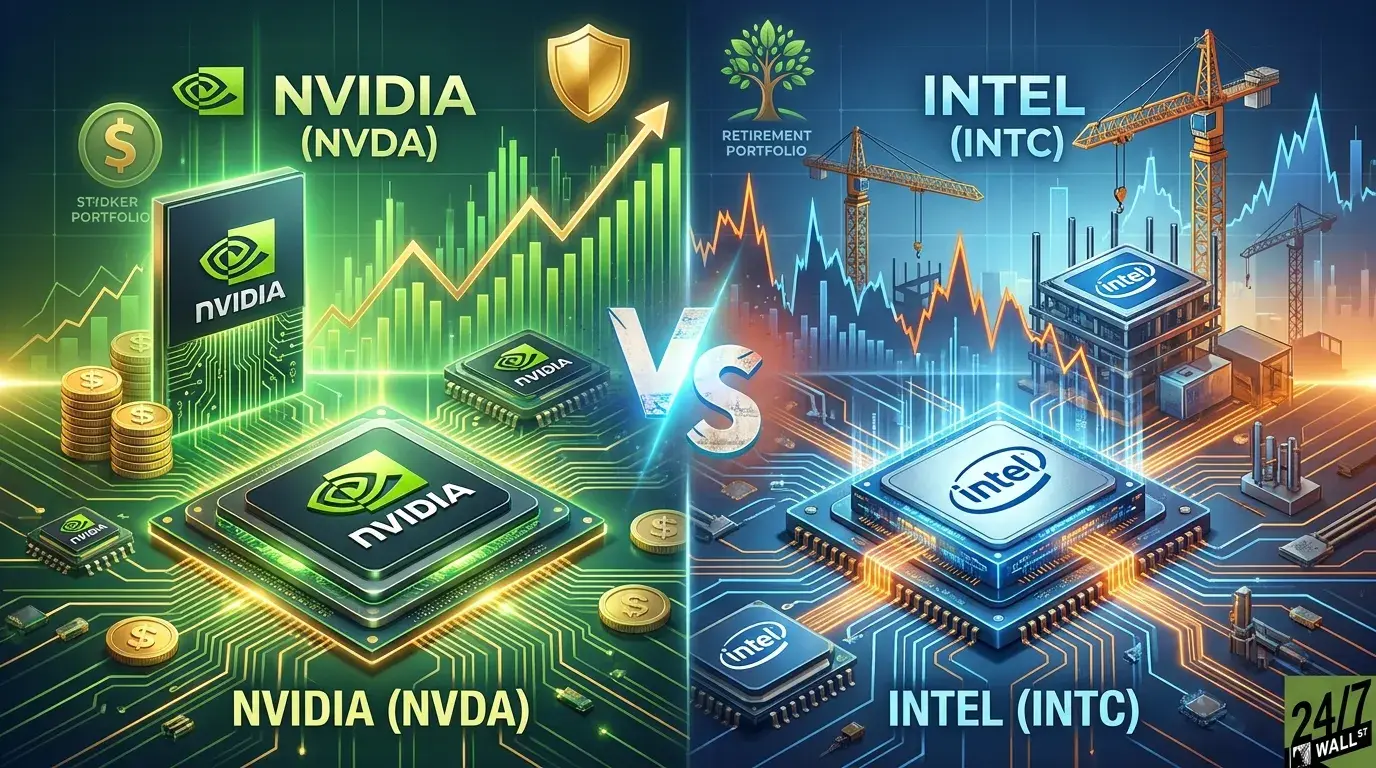
Retirement investors hunting AI chip exposure often narrow the choice to two NASDAQ names: NVIDIA (NVDA) or Intel (INTC). Both sit at the center of the AI buildout and have gained attention in 2026, but they serve very different roles in a portfolio funding withdrawals. Understanding growth potential, dividend income, valuation and risk is key to deciding which stock — if either — belongs in a retirement allocation.
NVIDIA: high growth, higher volatility. NVIDIA is the poster child for AI chips, powering data centers and generative AI models. Its revenue growth and profit margins have been extraordinary, and the stock reflects those expectations. For retirement investors seeking capital appreciation, NVIDIA can offer substantial upside, but that comes with volatility and sensitivity to valuation shifts. NVIDIA pays little or no dividend historically, so it’s not a direct source of income for portfolio withdrawals.
Intel: income and stability with turnaround potential. Intel remains a larger, more diversified semiconductor company with an established business, manufacturing operations and a history of dividend payments. For investors who prioritize steady withdrawals, Intel’s dividend and more moderate valuation can make it closer to the “stock” in a conservative retirement sleeve. That said, Intel faces competitive pressures in AI chips and must execute on investments to regain market share, so it’s not risk-free.
How retirement investors should think about allocation. For retirees, the question isn’t always which single winner to pick but how much exposure to AI chips is appropriate. A common approach: allocate a smaller growth sleeve to NVIDIA for long-term upside while keeping the income sleeve in dividend-paying names like Intel, bonds, or dividend ETFs. Rebalancing and position sizing matter — treat NVIDIA as a growth allocation and Intel as part of an income/quality allocation.
Practical considerations and next steps. Review your withdrawal needs, emergency cash, and overall portfolio diversification before increasing AI chip exposure. Check valuation metrics (P/E, forward guidance), dividend yield and payout sustainability for Intel, and concentration risk for NVIDIA. If you’re unsure, consider dollar-cost averaging or ETFs that spread AI-chip exposure across multiple companies.
Conclusion: For pure income and lower volatility, Intel more closely fits a retirement stock profile; for growth and higher upside, NVIDIA is the AI bet. Most retirees will benefit from a balanced approach that uses both names in the right proportions for their income and growth needs.
Published on: June 3, 2026, 10:11 am