Why Financial Advisors Turn to Outside Account Providers for Tax Management
Advisors increasingly rely on outside account providers to manage clients' taxes—prioritizing tax efficiency, reporting and compliance over just assets or platforms.
Page views: 2
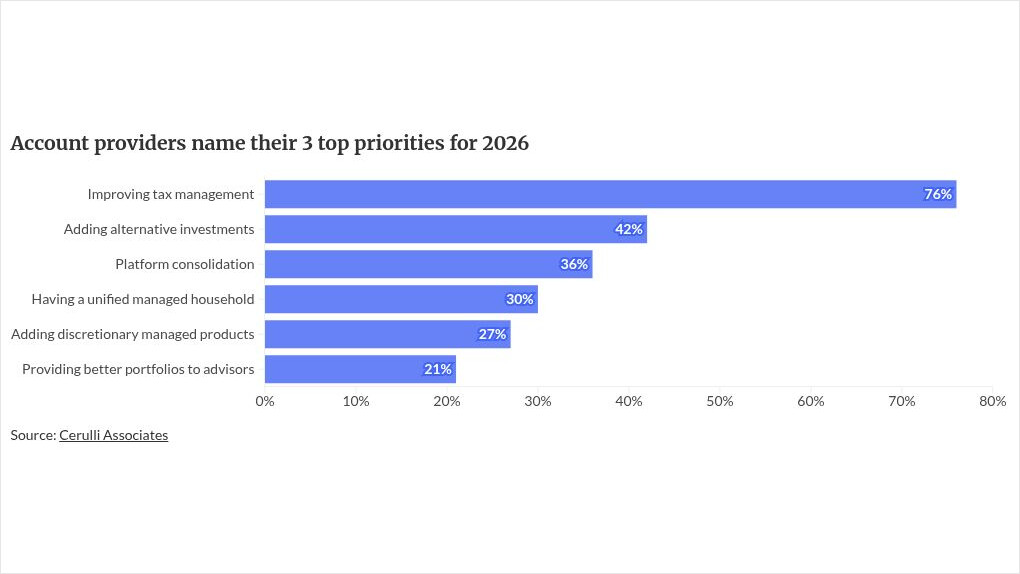
Financial advisors today want more than access to alternative assets or simplified platforms. Increasingly, they turn to outside account providers to help manage clients' taxes — a shift driven by the growing importance of tax efficiency in wealth management and the complexity of modern portfolios.
Managing client taxes is no longer a back-office afterthought. After-tax returns determine real client outcomes, and advisors know that tax-aware strategies can materially affect performance. Outside account providers and custodians now offer specialized tax services—like automated tax-loss harvesting, accurate cost-basis tracking, consolidated reporting, and year-end tax packages—that advisors need to deliver tax-efficient strategies consistently.
Third-party providers bring technology and scale. Robust integrations, APIs, and advisor tools let firms automate routine tax tasks while maintaining oversight. For example, portfolio tax optimization can be performed across multiple accounts, minimizing wash sale risks and optimizing the timing of capital gains. Consolidated tax reporting simplifies client conversations and reduces the administrative burden that often distracts advisors from strategic planning.
The benefits for advisors are tangible. Leveraging outside account providers enhances client service, supports fiduciary obligations, and helps retain clients who increasingly expect transparent, tax-aware advice. It also enables smaller firms to compete with larger wealth managers by accessing enterprise-level tax solutions without building them in-house. Cost efficiencies and improved operational workflows free advisors to focus on financial planning and relationship building.
Choosing the right partner matters. Advisors should evaluate providers for tax reporting accuracy, integration with their CRM and financial planning software, real-time visibility into tax positions, and a proven compliance record. Fee structures, client-facing portals, and the depth of tax-related features—such as multi-account loss harvesting and automated wash-sale management—should factor into the decision.
In a market where after-tax returns define client satisfaction, outside account providers have become essential allies. By prioritizing tax management alongside access to alternative assets and streamlined platforms, advisors can deliver smarter, more competitive wealth management that protects client outcomes and strengthens long-term relationships.
Published on: July 21, 2026, 8:11 am